In an earlier article I wrote about self-leadership: the ability to guide your own thoughts, decisions and actions instead of waiting for someone else to do it. The idea is old. Around 430 BCE in Athens, Socrates asked people to know themselves. Around 108 CE, the Stoic Epictetus taught that we control our judgements and actions, even when we control little else. And in 1377, Ibn Khaldun described in his Muqaddimah how discipline and shared purpose shape whole societies.
In Dubai I saw that same principle at work, only at the scale of a city-state. I want to describe it without falling into the tone of a brochure. It deserves a sober look.
Money explains less than people think
The usual explanation for Dubai is simple: oil money. It does not survive contact with the numbers. Dubai's own oil reserves were modest compared with Abu Dhabi's, and the emirate's leadership said years ago that oil accounts for less than one per cent of its GDP. Whatever Dubai is today, it did not become that by pumping oil.
More importantly, money on its own has never guaranteed success. Many countries have had far greater resources and turned them into corruption, debt or stagnation. Economists even have a name for it: the resource curse. Wealth makes it easier to postpone hard decisions, to buy loyalty rather than build institutions, and to consume rather than invest.
Dubai could have taken that path. That it did not was a choice, not a law of nature. Money was the fuel; the decisive factor was how it was steered.
A philosophy, not just a plan
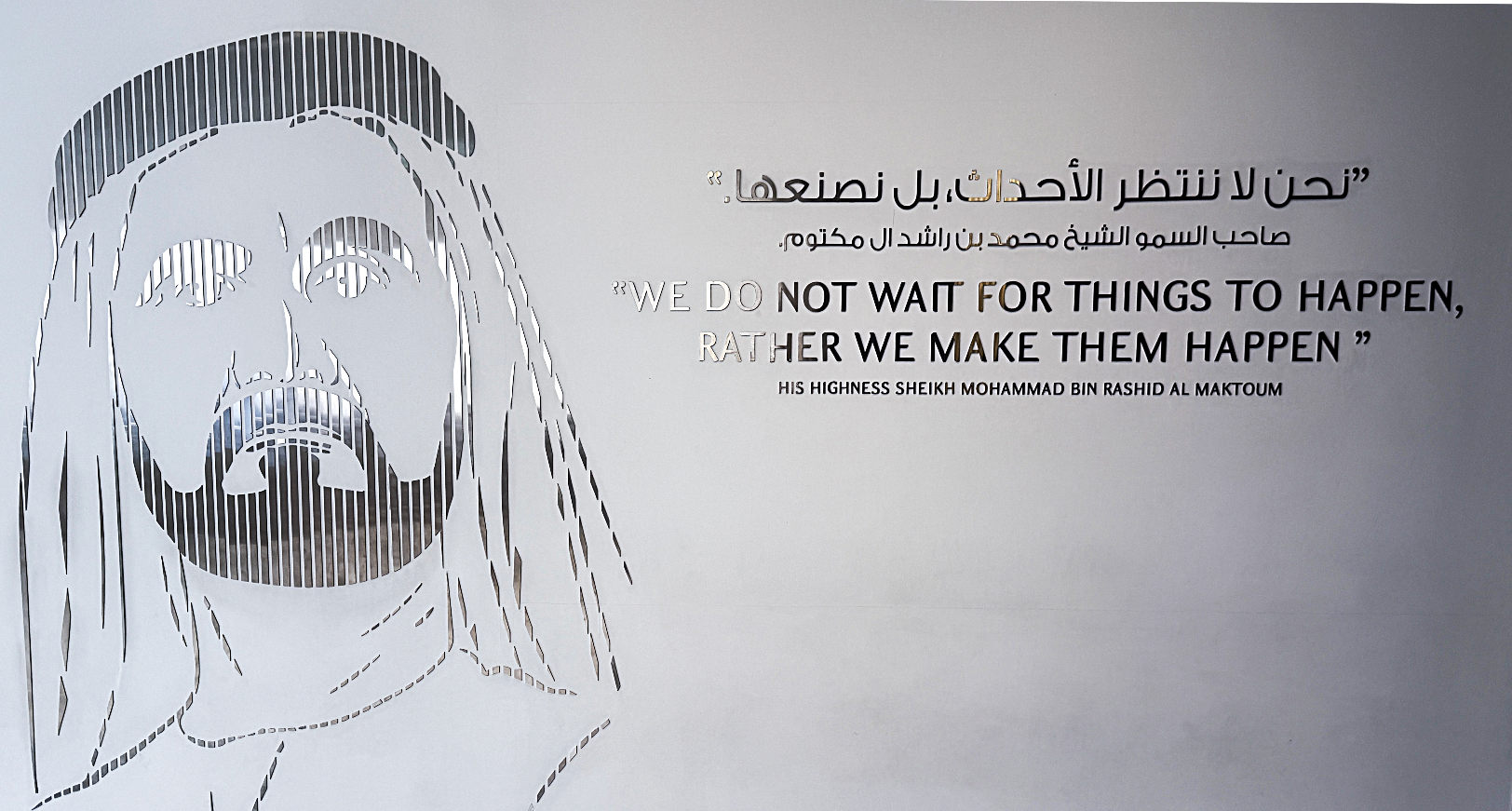
Sheikh Mohammed bin Rashid Al Maktoum did not start from zero. His father, Sheikh Rashid bin Saeed, had already bet on trade: dredging the Creek, building ports and, at Jebel Ali, one of the largest man-made harbours in the world. Sheikh Mohammed carried that logic further and turned it into an explicit philosophy of government, which he has set out in his own books, among them Flashes of Thought.
A few ideas run through all of it:
- Ambition as a working assumption. "There is no such thing as impossible," he writes, "everything is achievable with ambition and drive." He recalls being told that tourism in a hot desert could never work.
- Execution over announcement. A vision only counts when it becomes visible: in a metro line, a functioning service, a procedure that takes minutes instead of weeks.
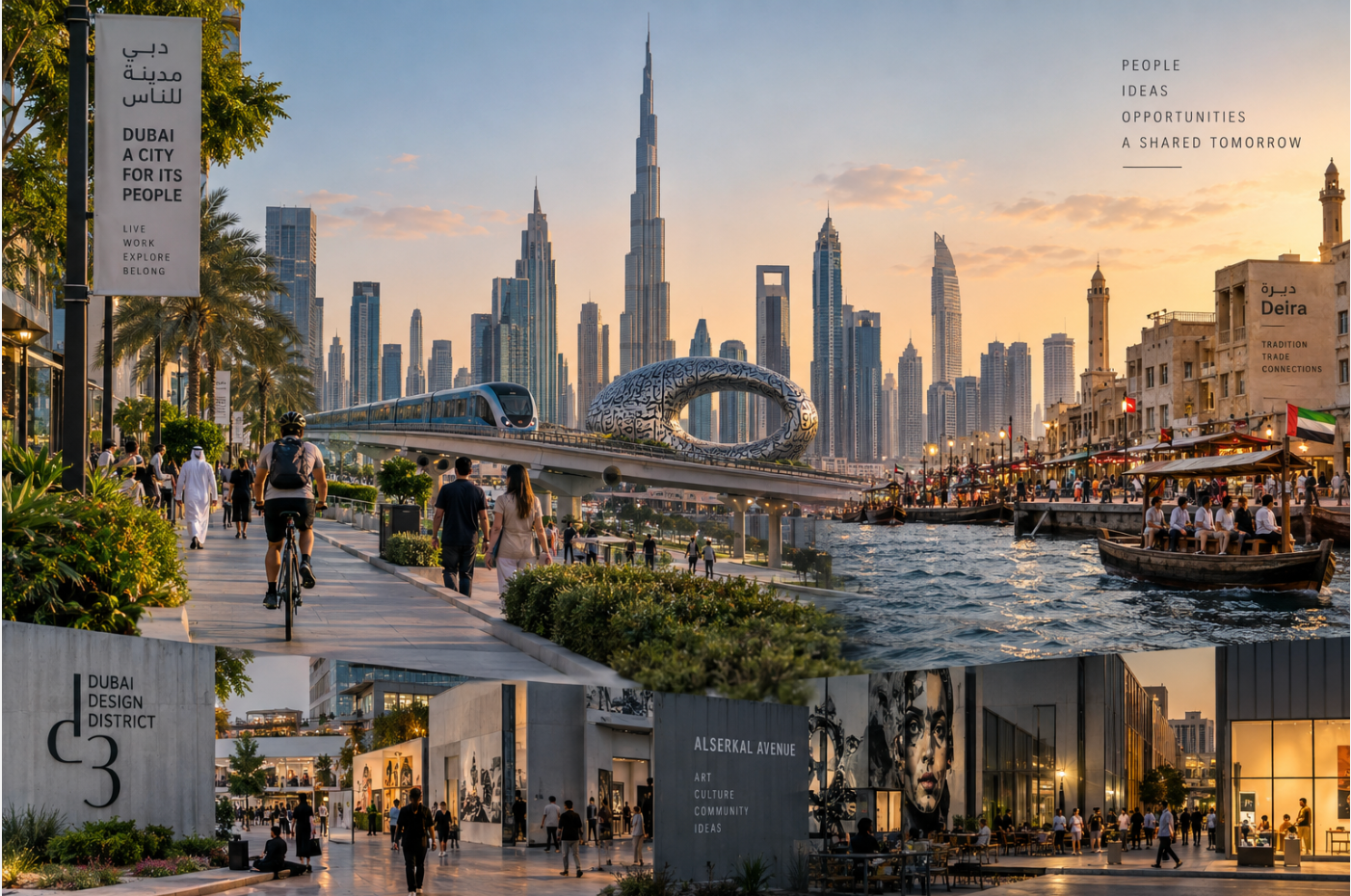
- People as the measure. "Good governance is about nothing more or less than creating happiness," is another of his lines. Behind the slogan is a hard test: what does a policy actually do for the person who has to live with it?
- Openness to talent. Dubai decided early to attract capable people from everywhere rather than rely only on its own small population.
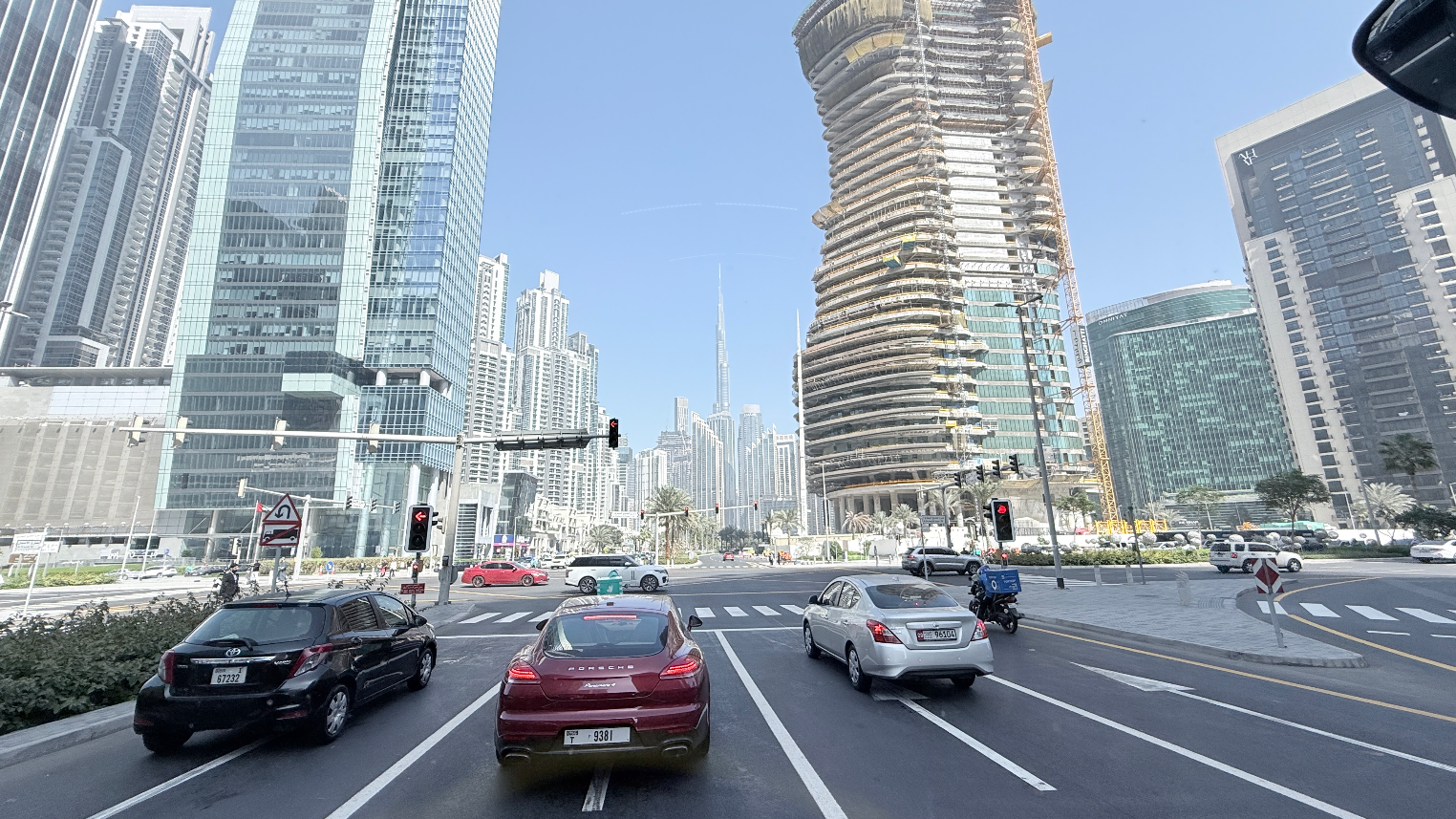
None of this is unusual as rhetoric. Plenty of governments talk about vision and people. What struck me during my five weeks of close observation was how much of it can be checked in daily life: in the speed of public services, in the cleanliness and order of public space, in the sense of safety that let me cross the city by bicycle.
It could have gone wrong, and at times it nearly did
An honest account has to include the moment when the model was tested. In late 2009 the state-linked conglomerate Dubai World, the parent of the developer Nakheel, could not meet its debts. Abu Dhabi stepped in with a 10 billion dollar support package. Projects stalled; some ambitions, such as parts of the artificial "World" islands, stood unfinished for years.
That episode is worth remembering because it shows the other side of "nothing is impossible." Ambition without restraint becomes overreach. A philosophy built on speed and boldness needs a counterweight: honest risk assessment, the willingness to correct course, and partners who can cushion a fall. Dubai had to learn that the hard way, and the city that recovered afterwards was more careful about debt than the one that went into the crisis.
The model also has costs and questions that a visitor should not ignore: a population that is overwhelmingly expatriate, heavy dependence on the car in many districts, and growth that constantly runs ahead of infrastructure. Admiration does not require pretending these do not exist.
Where self-leadership comes in
This is the point that interests me most. Dubai's leadership philosophy is not only something the government applies to itself. It is also an offer to everyone who comes here, and the offer has conditions.
The city provides a framework: safety, functioning institutions, fast procedures, open markets, clear rules. What it does not provide is the effort. Nobody in Dubai will build your business, your career or your reputation for you. The framework rewards people who already lead themselves: who set their own goals, take responsibility for results, adapt quickly and do not wait to be told what to do next.
Put differently, the same principles that turned a trading town on a creek into a global city also work at the scale of one person:
- Vision: know what you want to build, and why.
- Execution: judge yourself by what you deliver, not by what you announce.
- Accountability: when something fails, and something will, correct it instead of explaining it away.
- Openness: learn from people who are better at something than you are, wherever they come from.
- Restraint: ambition needs judgement. 2009 is the reminder.
That is why I see Sheikh Mohammed's philosophy less as a personality to admire and more as an impulse to take away. It describes a way of working that people who arrive in Dubai can adopt for themselves. Those who do tend to find that the city meets them halfway. Those who expect the city to carry them usually discover that it will not.
My conclusion
Dubai did not succeed because it had money. Many places had money. It succeeded because a leadership vision was not only proclaimed but followed: long-term decisions were made, carried out with discipline, and adapted whenever reality pushed back or the future demanded something new. Whether that leadership style would work everywhere is an open question; Dubai’s size, its political system and its regional position are particular. What is certain is that it has worked here, and that its results can be seen and tested in everyday life.
The lesson for an individual, however, is universal, and it brings me back to self-leadership: opportunity is only potential. It becomes success when someone takes charge of it. In Dubai, that someone is expected to be you. So study Sheikh Mohammed’s leadership philosophy. Measure it against your own objectives, debate it with others, and make it a reference point for your own path to success. Then watch what begins to change. There will be moments when external pressures, or internal ones in your life or your company, prove stronger. But if you keep thinking strategically and keep these principles in mind, you will overcome the obstacles, you and your company will emerge stronger, and things will change for the better.
And it should not be forgotten: those who live in Dubai are not on their own. Behind this philosophy stands a leader with a capable team that keeps creating and adapting the conditions for people in Dubai and across the Emirates to succeed.