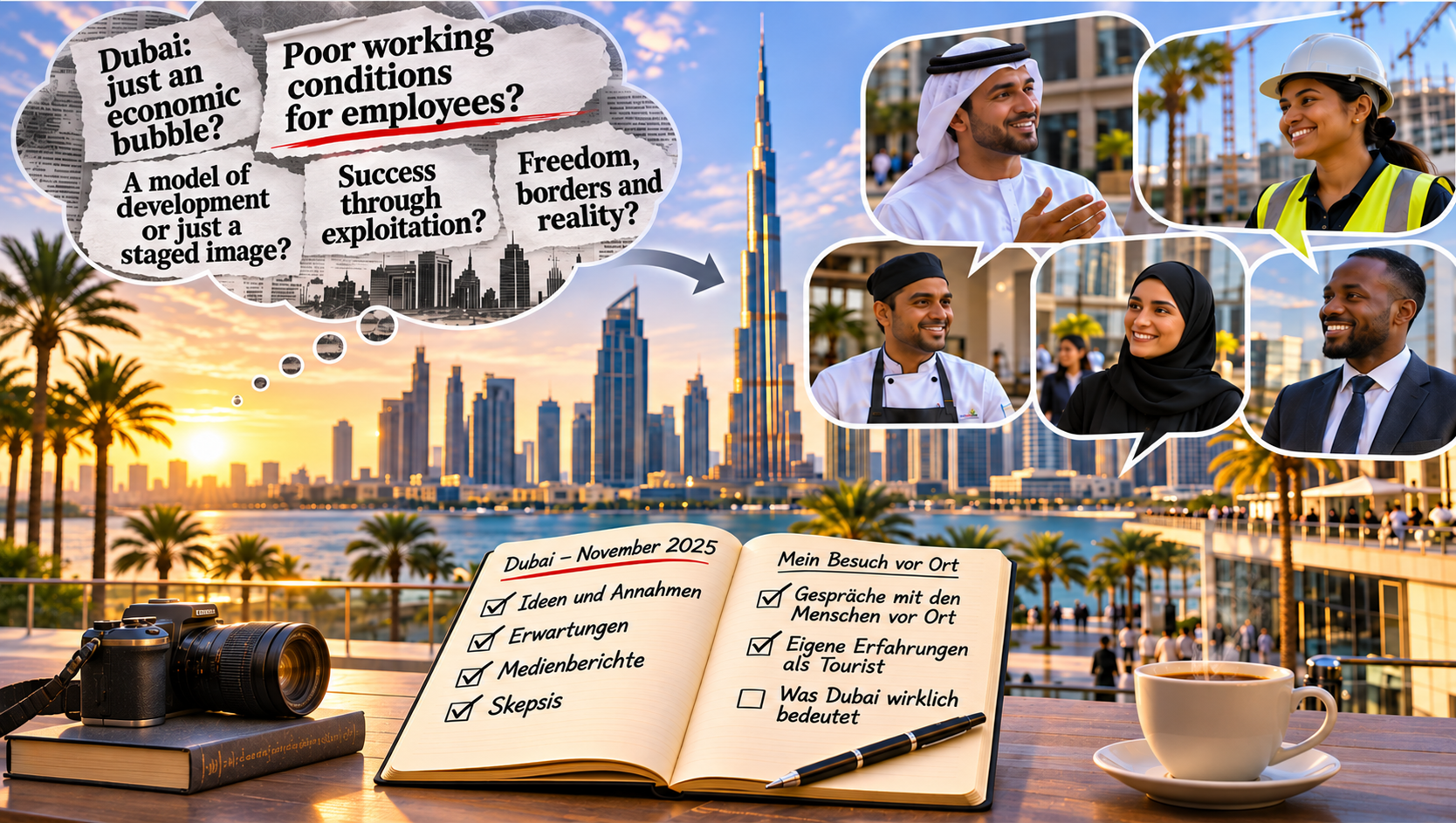
For many years, Dubai reached me only through the eyes of others. Television reports, documentaries, newspapers and magazines told me what the city was. I did not doubt them. Why would I? They were serious sources, and their message was remarkably consistent.
By the time I boarded the plane to Dubai in November 2025, I could have summed up that message in five sentences. I had been told that Dubai is all façade. That foreign workers there live in misery. That it is a city only for the rich. That it is artificial and soulless. And that freedom there is limited.
I did not travel to prove these sentences wrong. I travelled to see whether they were true. Here is what I found, first in two weeks in November 2025 and then in five more weeks from February to the first week of March 2026.
1. "It is all façade"
What I had been told: Behind the glittering towers there is nothing. Dubai is a stage set, built to impress and to hide what lies behind it.
What I found: A façade is something you see from the outside. I went inside. I used the metro and the buses every day, took taxis, ate in simple restaurants and in shopping centres, dealt with public offices, and even got to know the emergency service and a hospital. I did not see a city that merely looks as though it works. I saw a city that works, day after day, and not only where tourists are watching.
A stage set can impress a visitor for an evening. It cannot carry the daily life of millions of people for years.
2. "Foreign workers live in misery"
What I had been told: The people who build and serve the city are exploited, kept apart and without hope.
What I found: One conversation has stayed with me more than any other. A young man told me that he shares a room with many other men, and that life there is not easy. He did not hide that. But he also told me about his dream. A cousin of his had come to Dubai the same way, and within a short time he had made progress and found a better-paid job. Now he can afford a small apartment of his own.
The young man himself had not even finished school. He explained that he comes from a very poor family, in a country troubled by corruption, a country that is nothing like Dubai. Here, he said, he has the opportunity to work for a better life. He does not see the crowded room as a place of misery. He sees it as an incentive to work even harder, so that one day he can leave it behind.
While we were talking, other workers gathered around us. I asked them whether they shared their colleague's view. They all agreed. For them, Dubai is the place where they can overcome the poverty they were born into, poverty in which, in their own countries, they might have lived and died without ever daring to dream of a better life. They told me that Dubai is safe, even where they live now. And they said that more people will come, because the word has spread through the many who have already made it here, from nobody to somebody.
In their eyes, there is no limit. The Emirates do not segregate them, they told me. They are treated like anyone else.
This was not a single voice. This question matters more to me than almost any other, so I raised it with nearly every person I had the chance to talk to. Hard as it may be to believe, I did not hear a single different opinion.
At the airport, I met a very young woman from Pakistan, and my curiosity got the better of me. She told me that she shares a room with other young women, and that her brother had brought her to Dubai. He had invested in further education and now has a good job. She wants to follow the same path, because she wants to study.
Of course, not everyone succeeds. Some people fail, here as everywhere. But if Dubai itself, or its culture of accepting people as they are, ever contributed to such a failure, that would be the exception, not the rule.
3. "It is a city only for the rich"
What I had been told: Dubai is a playground for millionaires, oligarchs and influencers. Ordinary people have no place there.
What I found: The luxury exists, and nobody hides it. But it is only one layer of the city.
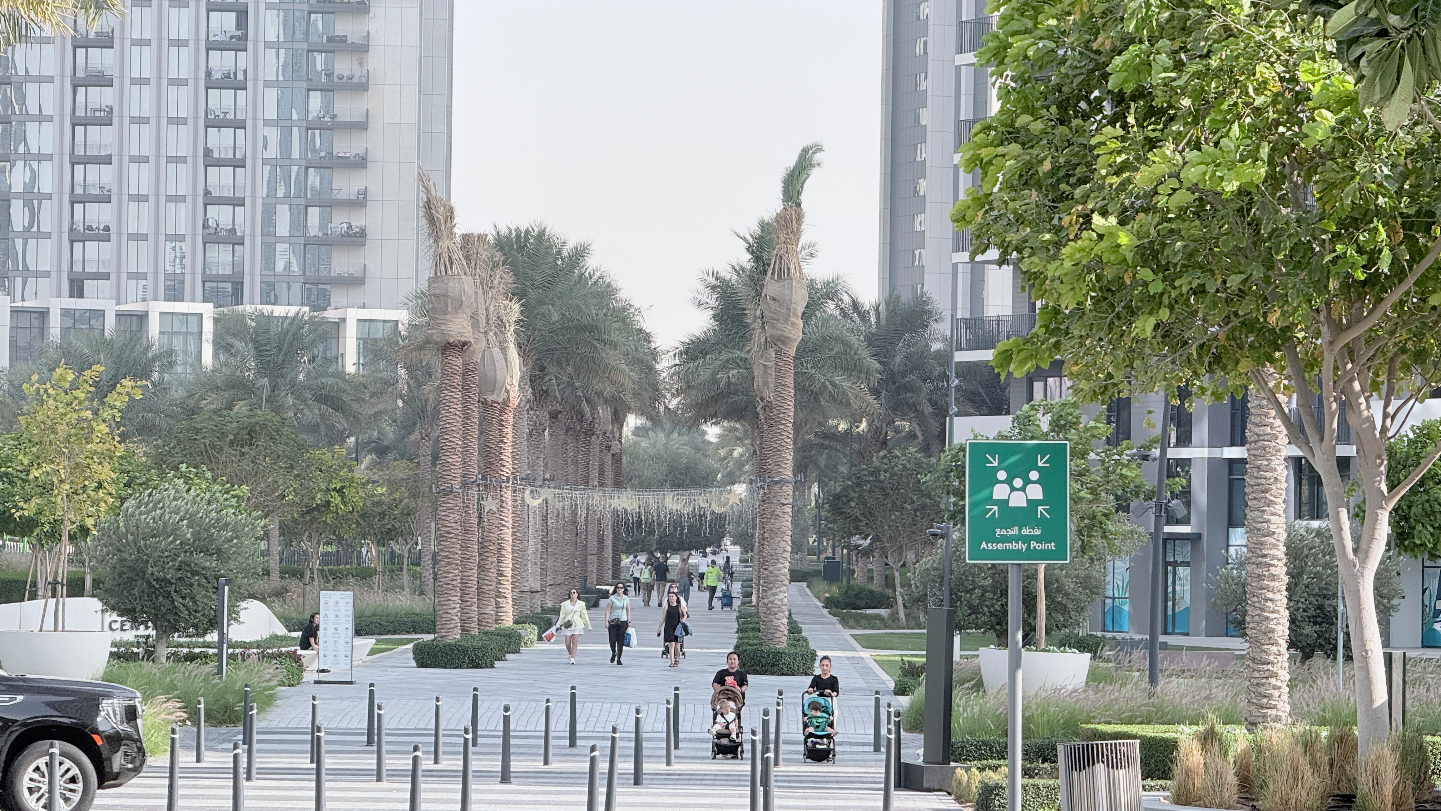
Driving from Business Bay towards Deira, you pass through many residential areas, and I visited several of them. I did not go inside the buildings, but from the outside they looked simple and very functional. I saw hospitals and schools, and the areas are well served by public transport.
What surprised me most were the supermarkets. They are full of excellent fruit, meat and other products from all over the world. I could not find anything missing that one could otherwise only buy in the supermarkets of Dubai Mall.
I did not see the recognisably wealthy people I had seen in Business Bay or on Palm Jumeirah. In one of these supermarkets, a woman who worked in one of its departments was just finishing her shift, and we started talking. She lives in the area, is married, and her husband and her parents live there too. Her parents will soon retire, but they do not want to go back to their home country, only to visit it. Her salary, she told me, is good for the kind of work she does and for her professional profile.
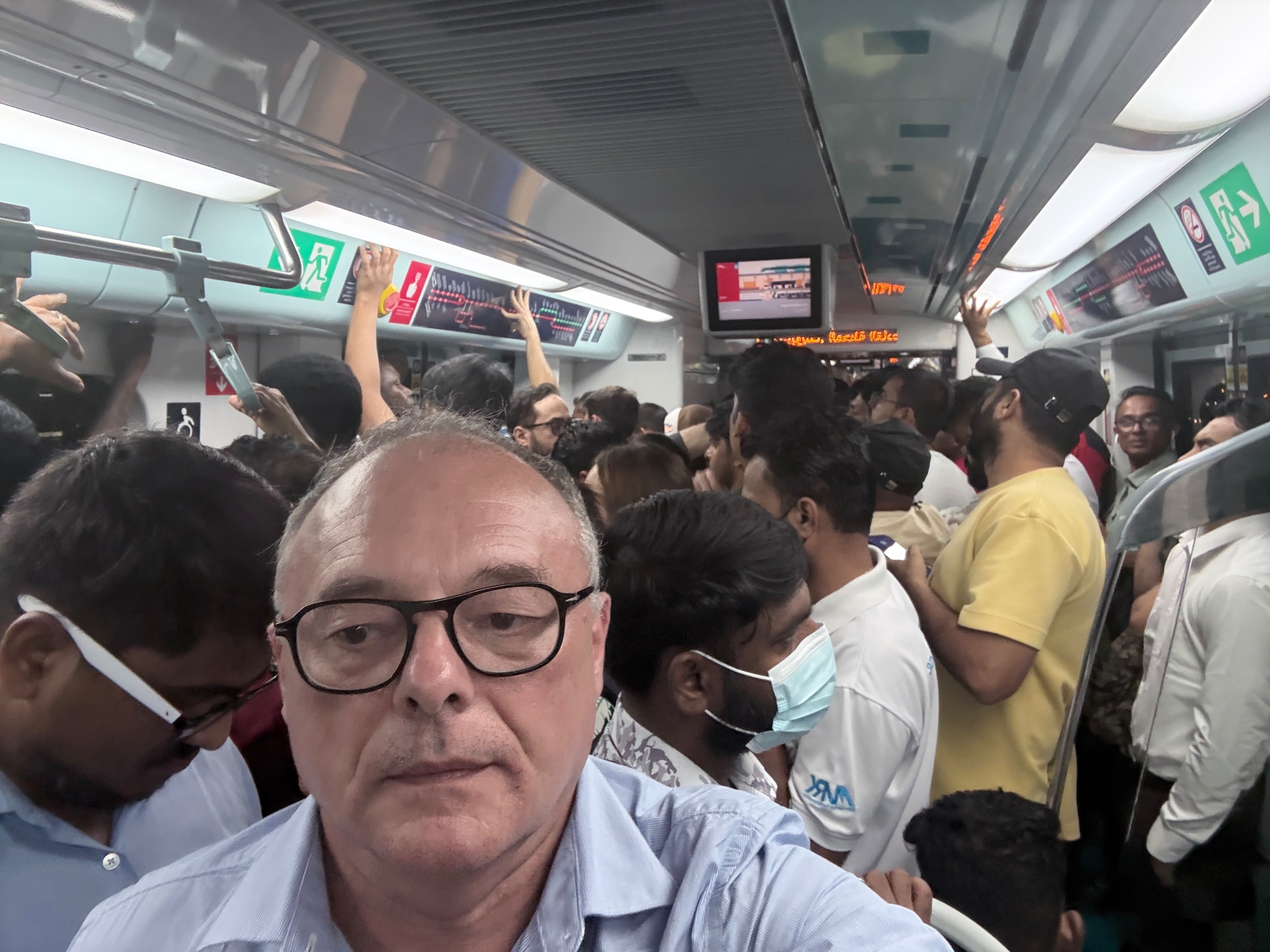
Early in the morning, I watched taxi drivers, truck drivers and construction workers on their way to work. On the metro, I stood next to people from every income level. During my second stay, I deliberately compared the cost of living: food, schools, and rents in the luxury districts as well as in the areas where workers live.
Dubai is a city for the rich. But it is also, and above all, a city for the many people who come with very little, want to become more than they were, and choose to stay, even when it is time to retire.
4. "It is artificial and soulless"
What I had been told: A city built on sand in a few decades cannot have a soul. Everything is new, planned and without roots.
What I found: What kind of soul can a city have? Is it a place that welcomes you from the very first day, or a place that rejects you because your blood is not from there?
Many years ago, when I worked for the headquarters of an American company in Chicago, I travelled there twice. One day, sitting in a café, I met a German architect. We talked about Brazil, about Germany and about the United States, especially Chicago. He asked me why I had chosen Germany. I asked him why that interested him. "Because Germany is not easy for foreigners," he said.
Then I asked him why he had stayed in Chicago for so many years. I assumed it was the beautiful architecture, and that there was much to do there for someone in his profession. He told me something I have never forgotten: a city can have the most beautiful and most modern architecture, but it is the people who move you and who create the strongest feelings. He asked me whether I understood what he meant. I did. We both laughed. Then he had to leave, and we said goodbye.
A few years later, I saw a television report about his death. Only then did I learn that he had been famous.
I know how true his words are from my own country. Many people from abroad love Brazil, above all because of its people. Its natural beauty and its warm climate alone would not create this kind of feeling. Culture has a great deal to do with people. In Brazil, you can be robbed, or even killed, for a mobile phone. Despite these dangers, foreigners love the country. The soul of Brazil is its people, not its government, which fails to protect them in public spaces.
His words came back to me in Dubai. Yes, Dubai is new, and much of it is planned. But planned does not mean soulless. I walked through the Al Fahidi district and the old souks, crossed the Creek where wooden boats still carry goods as they have for generations, and felt the history of the people who made life possible in a harsh desert long before the first tower was built.
During Ramadan, I was invited to evenings where people from India, Pakistan, Saudi Arabia and many other countries sat at the same table. In Dubai, more than 200 nationalities share one city in remarkable peace, and from the first day I felt welcome among them. Here I found all of it: people who make you feel at home, services that make any consumer feel like a king, and streets where you are safe.
The soul of Dubai is something you can feel. And without feeling the soul of a place, no one can truly live there, not in Germany, not in Brazil, not anywhere.
5. "Freedom is limited"
What I had been told: Dubai is a place where people have to be careful about what they do and say.
What I found: I felt free. I moved through the city as I wished, by day and late at night, alone and without fear. I spoke with whoever I wanted, about whatever we wanted, and people spoke openly with me about their lives, their work and their hopes. I never felt watched, never felt restricted and never felt that I had to hide anything.
For me, freedom also means being able to walk home safely at night, to trust that I will be treated with respect, and to live without constant worry. In Dubai, I experienced exactly that.
And there is another aspect that has made my view even stronger since I visited Dubai.
Imagine being the ruler of a country that, only a few generations ago, had almost nothing. A strip of desert and coast, where heat, scarce water and isolation made survival itself a daily struggle. Through some geographical luck, and above all through the wisdom, foresight and discipline of your family, this place has become one of the safest and most prosperous cities in the world. A city where millions of people from more than 200 nations do not only dream of a better life, but already live one.
Such an achievement is not a law of nature. It is fragile. It took generations to build, and it could be damaged in a very short time. Whoever is responsible for it does not have the right to leave it unprotected.
The press is one of the strongest powers in any country, and the press of a powerful nation reaches far beyond its own borders. It can influence events in another country in favour of its own country of origin, and in doing so weaken the country it reports on. In parts of the Western world, I have watched how media can deepen divisions, inflame conflicts and spread insecurity, at times achieving what no army could: weakening a society from within. If I knew that what my family, my administration and the people of my country had built together could be undermined in this way, I would not wait. I would act to protect it.
I am a journalist myself, and I value the role of the press. But freedom is not only the right to say anything. It is also the right to walk home safely at night, to raise children without fear, and to trust that tomorrow will be better than today. In many countries with a so-called free press, people suffer from problems far greater than any I encountered in Dubai: violence, corruption, poverty and hopelessness. A free press has not protected them from any of this.
Dubai has chosen a different balance. Having seen what it has made possible for so many people, I understand that choice, and I respect it.
Five beliefs, one experience
None of the five sentences I brought with me survived my time in Dubai unchanged. I do not say that those who wrote them invented their stories. But a picture formed from a distance shows only what someone has chosen to show. The rest of the city remains invisible until you go and look.
I went and looked. What I found was not a façade, but a city that works. Not misery, but ambition. Not a playground for the few, but a home for the many. Not a city without a soul, but people from all over the world living together. And not fear, but a freedom I felt every single day.
That is why I want to return.